
FAQs
Have a real estate question? Start here. This FAQ page covers how buying and selling works in today’s market, including timing, costs, financing, inspections, appraisals, negotiations, and what to expect at closing. If you want a clear next step, call or text Tracey and I’ll help you map out the smartest move.
Call or text Tracey for a quick answer and a clear next step.
Buying FAQs
The first step is a quick plan: confirm your budget range, ideal locations, and timing, then get pre-approved if you plan to finance. This keeps your search focused and makes your offer stronger.
Call or text me and I’ll map out the simplest next step.
Most purchases take 30 to 45 days from contract to closing, depending on financing, inspections, and appraisal timing. Your overall timeline also depends on how quickly you find the right property and negotiate terms.
Call or text for a timeline based on your price point and loan type.
Down payments vary by loan type and your goals. Some buyers choose a smaller down payment to preserve cash, while others put more down to reduce monthly payment.
Call or text and I’ll help you compare options with real numbers.
A licensed inspector reviews the home’s major systems and structure and provides a written report. After that, you decide what to request, what to accept, and what to renegotiate based on the findings.
Call or text and I’ll walk you through common inspection outcomes.
An appraisal is an independent opinion of value used by the lender to confirm the purchase price aligns with the market. If the value comes in below the contract price, you may renegotiate, bring funds to closing, or explore other solutions.
Call or text if you want a clear game plan for appraisal scenarios.
Selling FAQs
Pricing is based on recent comparable sales, current competition, condition, updates, and buyer demand. The goal is to price accurately for the market you’re in today, not last season.
Call or text and I’ll share a pricing range and strategy for your address.
Timing depends on price, condition, location, and current demand. Some homes sell quickly with the right preparation and pricing, while others need more time to find the right buyer.
Call or text and I’ll estimate timing based on recent activity in your area.
Start with the high-impact basics: declutter, deep clean, handle deferred maintenance, and improve lighting and curb appeal. Then focus on small updates that help buyers understand the space and condition quickly.
Call or text and I’ll give you a prioritized prep list.
Common costs can include agent compensation, title fees, transfer taxes (where applicable), repairs negotiated after inspection, and moving expenses. Your exact net depends on your price, mortgage payoff, and negotiated terms.
Call or text and I’ll estimate net proceeds with a simple breakdown.
After acceptance, the timeline typically includes inspections, negotiations, appraisal (if financed), final loan approval, and closing prep. You’ll also complete required disclosures and coordinate access for any follow-up visits.
Call or text and I’ll outline your step-by-step calendar.
First Time Homebuyer FAQs
Start by confirming your monthly comfort range, preferred locations, and timing, then connect with a lender for a pre-approval. This helps you shop with clear numbers and makes your offer stronger.
Call or text me and I’ll help you map out a simple game plan.
Upfront costs typically include your down payment, closing costs, and initial escrow items (like taxes and insurance). The total depends on your loan type and price point.
Call or text me and I’ll give you a realistic estimate based on your target range.
Pre-qualification is an early estimate based on unverified information. Pre-approval is stronger because the lender reviews documentation and provides a more reliable buying range. In competitive situations, pre-approval can matter.
Call or text and I’ll connect you with trusted local lenders.
From an accepted offer to closing, many purchases take about 30 to 45 days, depending on financing, inspections, and appraisal timing. Your full timeline also depends on how quickly you find the right home.
Call or text and I’ll outline a timeline for your situation.
The inspection evaluates the home’s condition and major systems so you can decide what to request or renegotiate. The appraisal is the lender’s value check to support the purchase price. Both steps protect you, but they can also affect negotiations and timing.
Call or text and I’ll walk you through the process step by step.

Investor FAQs
A strong investment usually comes down to numbers and durability: purchase price, expected rent, true operating costs, condition, and your exit options. The best fit depends on whether your goal is cash flow, long-term appreciation, or a mix.
Call or text me and I’ll help you pressure-test a deal quickly.
Plan for operating costs like taxes, insurance, maintenance, reserves, utilities (if covered by owner), HOA fees (if applicable), leasing costs, and property management. Expenses vary by property type and condition.
Call or text and I’ll help you estimate a realistic monthly expense range.
Self-managing can work if you have time, systems, and local coverage. A property manager can reduce day-to-day workload and help with leasing, maintenance coordination, and compliance, but it impacts your net.
Call or text and I’ll help you compare the real trade-offs for your situation.
Review rent comps, operating expenses, lease terms (if occupied), condition and major systems, any HOA rules, and local requirements that affect leasing. The goal is to confirm the property performs the way the numbers suggest.
Call or text and I’ll share a due diligence checklist you can use on any deal.
The biggest ones are underestimating expenses, skipping reserves, relying on optimistic rent assumptions, and not planning for maintenance and turnover. A simple, conservative pro forma helps you buy with clarity.
Call or text me and I’ll help you run the numbers before you commit.
FAQs for Seniors
The right time is usually when your home feels harder to maintain, your needs have changed, or you want to simplify monthly costs and upkeep. A quick plan can show whether downsizing now or later fits your goals.
Call or text me and I’ll help you map out options.
Common options include a smaller single level home, a condo or villa with less exterior maintenance, or a home closer to the places you visit most. The best choice depends on lifestyle, budget, and how much maintenance you want to keep.
Call or text and I’ll help you compare choices.
A low-stress sale focuses on a clear prep plan, simple staging steps, and a showing schedule that respects your routine. We can prioritize what matters most and avoid unnecessary work.
Call or text and I’ll share a step-by-step approach.
Yes, and there are a few ways to do it. The best strategy depends on your financing, timing, and comfort level with temporary moves.
Call or text and I’ll outline the cleanest path for your situation.
Typical costs can include agent compensation, closing fees, moving costs, and any repairs negotiated after inspection. Your net proceeds depend on your sale price, mortgage payoff (if any), and terms.
Call or text and I’ll estimate your net with a simple breakdown.
St Louis County Relocation
The best place to live in St Louis County depends on your daily starting point, your ideal drive time, and the lifestyle you want near home.
To narrow it fast, choose your top 2 priorities: commute time, nearby parks and trails, dining and errands, or a quieter pace. Then compare Mid, West, South, and North County by doing one short walk and one errand loop in each.
Your monthly cost in St Louis County is usually your mortgage payment plus property taxes, homeowners insurance, utilities, and HOA dues if applicable.
For a realistic estimate, buyers typically start with a comfortable monthly target, then work backward into purchase price using current rates and local taxes and insurance assumptions. I can help you build a clean monthly range tied to areas you are considering.
St Louis County market competition varies by location and price point, so the most accurate view comes from recent activity in the specific areas you want.
The key indicators are days on market, how often homes receive multiple offers, and how close sale prices are to list prices in your target range. If you share your budget band and preferred area, I can explain what “competitive” looks like right now for that slice of the market.
The fastest way to choose the right area in St Louis County is to run a simple weekend test in each pocket: a short walk, a quick errand loop, and a 10-minute neighborhood drive.
This gives you real-world context on traffic flow, convenience, and overall feel, which is hard to get from listings alone.
You can buy a home in St Louis County from out of state by using virtual tours, time-boxed in-person showing trips, and a clear plan for inspections and closing.
Most buyers succeed by scheduling showings in efficient loops, lining up inspection timelines early, and keeping communication tight with lenders and vendors. I can help you structure the process so you reduce surprises and stay on track.
Home Inspection FAQ for Buyers

A home inspection checks the home’s major systems and visible condition—roof, structure, plumbing, electrical, HVAC, and appliances. It’s not a guarantee and it usually doesn’t include specialty items like sewer scope, radon, mold testing, pools, or pests unless you add those.
Plan for about 2–4 hours for most homes. Larger or older homes can take longer, especially if you add radon or other specialty tests.
Yes, if you can. You’ll learn the home faster in 30 minutes with the inspector than you will reading a long report later. If you can’t attend, I’ll help you review the results and decide next steps.
An inspection is about condition and function. An appraisal is about value for the lender. An appraisal doesn’t dig into issues the way an inspection does.
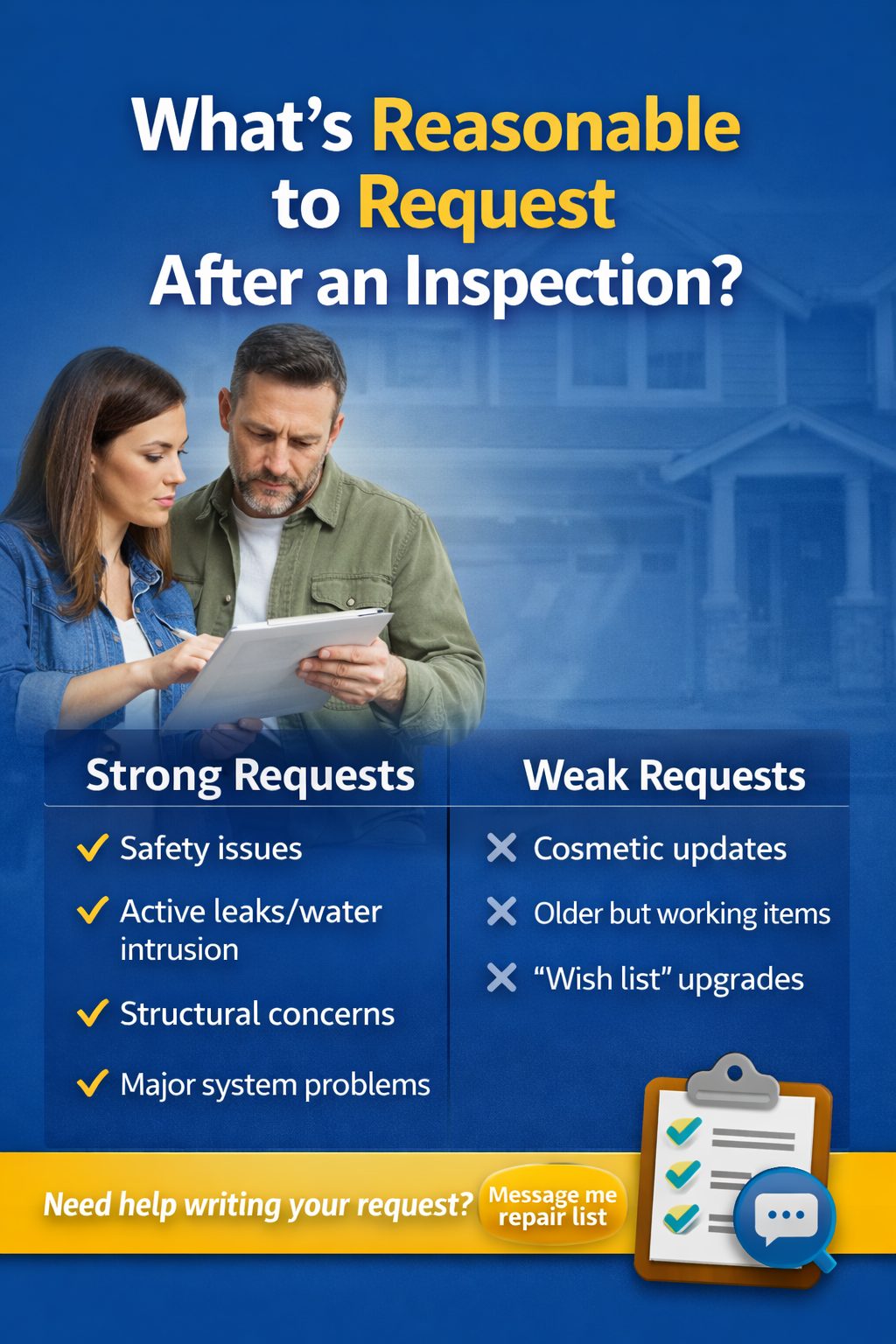
Deal-breakers are usually safety issues, major water/structural problems, or very expensive system failures. Normal wear and tear is things like caulking, minor cracks, loose hardware, or older-but-working systems.
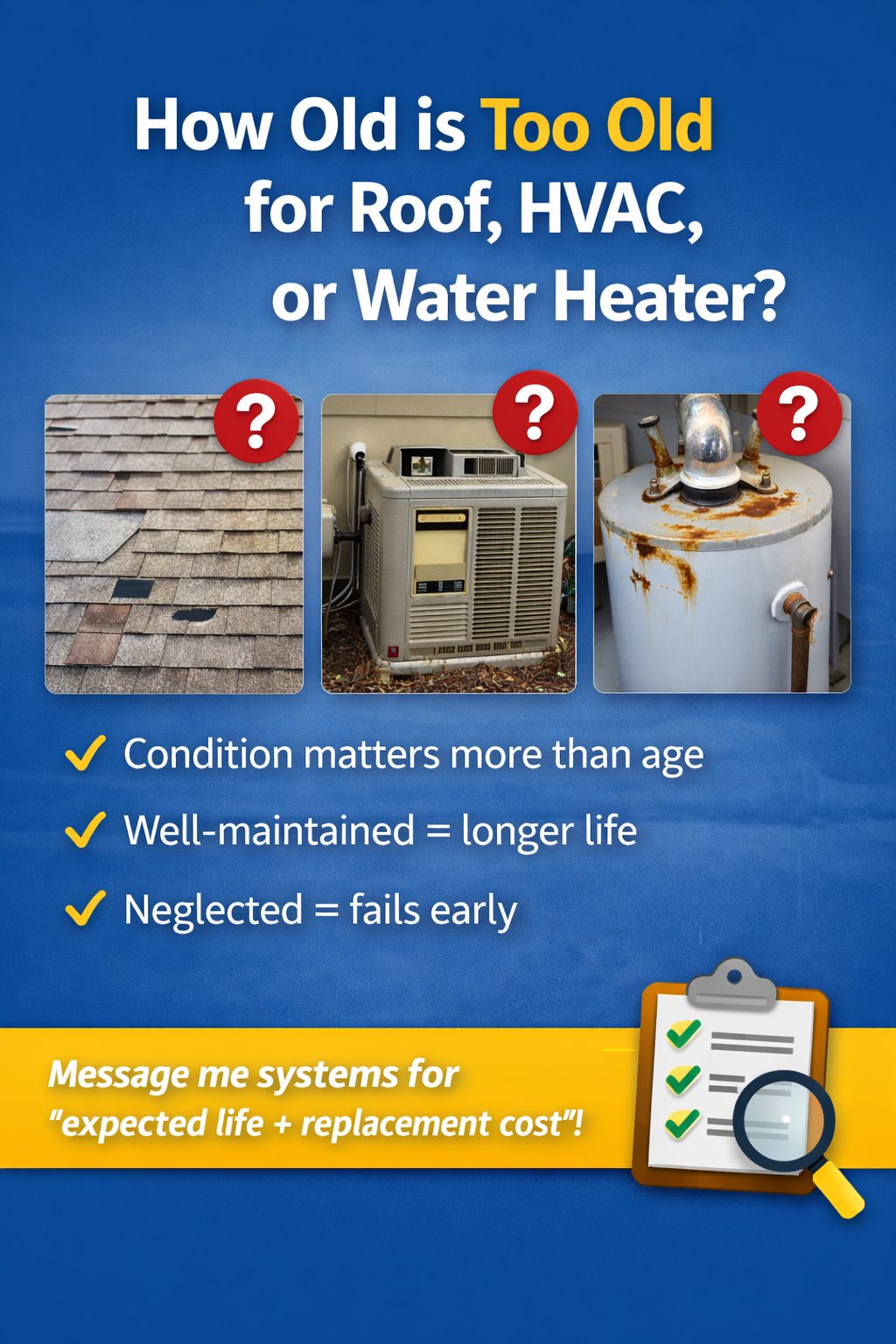
Age matters, but condition matters more. A well-maintained older system can perform great, and a newer neglected one can fail early. I focus on remaining life, current performance, and replacement planning.
A sewer scope is worth it for older homes, big trees near the line, or any signs of slow drains. It’s one of the best “peace of mind” inspections because sewer repairs can be costly.
Radon testing is common and usually inexpensive. It’s especially smart in homes with basements or lower levels. If levels come back high, mitigation is typically straightforward.
In many cases, yes—especially for older homes, wooded lots, or if your loan program requires it. It’s a low-cost add-on that can prevent a very expensive surprise.
es when the inspector flags something major—roof, foundation, electrical, HVAC, or sewer. Specialists give clearer answers and pricing so you can negotiate confidently.
Have more questions?
Get straightforward guidance on pricing, prep, showings, offers, inspections, closing and more.
314.603.8628
desimonrealtor@gmail.com
Coldwell Banker - West Regional
© 2026 Coldwell Banker Real Estate LLC
© Coldwell Banker 2023 – 2025. All Rights Reserved. Coldwell Banker and the Coldwell Banker logo are trademarks of Coldwell Banker Real Estate LLC. The Coldwell Banker® System is comprised of company owned offices which are owned by a subsidiary of Anywhere Advisors LLC and franchised offices which are independently owned and operated. The Coldwell Banker System fully supports the principles of the Fair Housing Act and the Equal Opportunity Act.
